

It turns out that many people of northern European descent have inherited some Neanderthal genes. A study found that these are contributing to a higher risk for Dupuytren's contracture (also called Dupuytren's disease). One study estimated that about 30% of Norwegian males over the age of 60 have Dupuytren's disease, but studies find that it is rare in African populations.
The researchers of the study looking at Dupuytren's disease noted that the average Neanderthal ancestry among Europeans is about 2%. [Note: Neanderthals are also referred to as Neandertals.]
Dupuytren's disease is a gradual thickening and tightening of tissue under the skin in the hand, which eventually can cause one or more fingers to stay bent toward the palm. It usually occurs in men over the age of 60.
Neanderthals and Denisovans (referred to as “archaic humans”) are now extinct. They lived in Western (Neanderthals) and Eastern Eurasia (Denisovans) until approximately ∼42,000 years ago. There was interbreeding (sex) with modern humans (Homo sapiens), which is how some of their genes have been passed down through the years.
From Science Daily: The Viking disease can be due to gene variants inherited from Neanderthals
Many men in northern Europe over the age of 60 suffer from the so-called Viking disease, which means that the fingers lock in a bent position. Now researchers at Karolinska Institutet, together with colleagues, have used data from over 7,000 affected individuals to look for genetic risk factors for the disease. The findings, which have been published in Molecular Biology and Evolution, show that three of the strongest risk factors are inherited from Neanderthals. ...continue reading "Genetic Risk Factors For Dupuytren’s Contracture Are Inherited From Neanderthals"
 Could this be another paradigm shift in medical care? This time it's substituting a non-surgical approach vs the current surgical approach for ACL ruptures.
 Recent studies suggest that "vaginal seeding " of a newborn is
  Today is the summer solstice. It's the first day of summer in the Northern Hemisphere. Enjoy!
 A recent study was good news for those wishing to lower their chances of developing heart disease (cardiovascular disease) without the use of medications. Instead, focus on the foods you eat, specifically those in a Mediterranean-style diet.
 Holy moly! Our carbon dioxide levels are rising, really rising! Every year there is a new high, and this year is no exception.
 It absolutely makes sense that a good diet before and during pregnancy is associated with better pregnancy outcomes, including the risk for miscarriage.
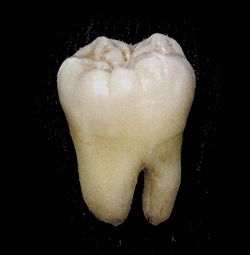 More clues were revealed in a recent study about the microbes involved in the formation of tooth decay and cavities (dental caries). Scientists and dentists have long known about Streptococcus mutans involvement in cavity formation, but they found that another bacterial species can also be involved.
 Artificial sweeteners are very popular, with sucralose (Splenda) being the most widely used artificial sweetener in the US. However, there is increasing evidence that these sweeteners are linked to health problems. Recently,