
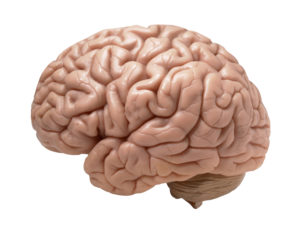
 Finally, a huge review of decades of studies answers the question of whether there are actual structural differences between male and female brains. And the answer is...(drumroll)... No - they are very similar. There aren't male brains and female brains with 2 different brain shapes or features. The main difference is a size difference in brain volume.
Women tend to have a little smaller brain (about 11% in adults) because they are smaller than men. (Similarly, smaller men also have smaller brains.) The Chicago Medical School researchers found that any sex/gender differences in the human brain are extremely subtle and inconsistent, and maybe account for 1% of variation between males and females. Note: Brain size is not correlated with or indicative of intelligence!
They found that the size of the structures in the brain (e.g cerebellum, hippocampus) change along with the volume - it's a matter of proportion. The researchers summarized it: "Males’ brains are larger than females’ from birth, stabilizing around 11% in adults. This size difference accounts for other reproducible findings: higher white/gray matter ratio, intra- versus interhemispheric connectivity, and regional cortical and subcortical volumes in males."
By the way, the researchers also point out that large studies find that human males and females are far more similar than different in most measures of cognition, personality and attitudes.
From Medical Xpress: Massive study reveals few differences between men and women's brains
How different are men and women's brains? The question has been explored for decades, but a new study led by Rosalind Franklin University neuroscientist Lise Eliot is the first to coalesce this wide-ranging research into a single mega-synthesis. And the answer is: hardly at all. ...continue reading "Main Difference Between Male and Female Brains Is Size"
 Evidence is building that caffeine should be avoided during pregnancy because it harms the developing baby. A recent
 Carbon dioxide levels in the atmosphere reached a new high in 2020 - and this in spite of the COVID-19 world-wide lockdowns. Yikes!
 Many pesticides are neurotoxins. Dr. Ray Dorsey (publisher of
  Exercise is good for memory and the brain. University of Geneva researchers found that even one short bout of moderate or intense exercise improves memory and acquisition of new motor skills.
 A recent study found that eating higher levels of foods with flavonoids (e.g. berries, apples, and tea) may lower the risk of later development of Alzheimer's disease and other age-related dementias.
 Could our risk of getting Alzheimer's disease be lowered by something as simple as getting flu and pneumonia vaccines? Two large observational studies suggest just that.