
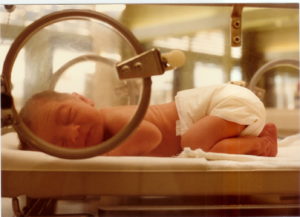
 Another excellent reason to breastfeed premature infants - to increase the odds of preventing retinopathy of prematurity (ROP), which is the reason preemies can go blind. It occurs when blood vessels in the retinas of premature infants start to grow out of control. If the abnormal growth continues, the retinas detach, and this can cause blindness.
Sadly, an ROP epidemic occurred in the 1940s and early 1950s when hospital nurseries began using excessively high levels of oxygen in incubators to save the lives of premature infants. During this time, ROP was the leading cause of blindness in children in the US. In 1954, scientists funded by the National Institutes of Health determined that the relatively high levels of oxygen routinely given to premature infants at that time were an important risk factor, and that reducing the level of oxygen given to premature babies reduced the incidence of ROP.
Nowadays ROP is a leading cause of childhood blindness in developed countries. A large US study found that in extremely preterm infants with a gestational age of 22 to 28 weeks, the incidence of ROP was 59% (96% at 22 weeks and 32% at 28 weeks). ROP is considered a multifactorial disease, and risk factors such as prematurity, low birth weight, oxygen therapy, and oxidative stress have been associated with its development.
This recent study was a meta-analysis of five studies (of 2208 pre-term infants), and it found that the overall incidence of ROP was reduced among infants fed human breast milk compared with those fed formula. The best results in preventing severe ROP was in babies fed exclusively breast milk (up to 90% reduction) or mainly human breast milk feeding. It is thought that breast milk may protect against the development of ROP because of its antioxidant and immune-protective properties. Note that studies involving donor milk were not included because past studies did not find any advantage for donor milk over formula. This may be possibly related to loss of the breast milk microbes (breast milk normally contains up to 700 species of bacteria) during processing (pasteurizing/heat treatment of milk for 30 minutes) and storage of donor milk. From NPR:
Mother's Milk May Help Prevent Blindness In Preemies
If Stevie Wonder had been born three decades later, we might never have gotten "Superstition" and "Isn't She Lovely" — but the musician might never have gone blind, either. Born premature, Wonder developed retinopathy of prematurity, an eye disease that afflicts more than half of babies born before 30 weeks of gestation.Though treatments were developed in the 1980s, about 400 to 600 U.S. children and 50,000 children worldwide still go blind every year from the condition. Now a study suggests that number could be slashed by more than half if all those preemies received their mothers' milk.
The study, actually a combined analysis of five studies from 2001 through 2013, found that preemies receiving human milk from their mothers had 46 to 90 percent lower odds of retinopathy of prematurity (ROP), depending on how much milk they received and how severe the ROP was. The studies were observational, so they cannot show that breast milk directly caused the lower risk.
Of the infants who develop ROP, most recover and develop well without treatment, but about 10 percent develop severe ROP, increasing their risk of blindness, Chiang said. About half of those infants need treatment, which will prevent blindness in 80 to 90 percent of them.
The new research analyzed the outcomes of 2,208 preterm infants based on whether they received exclusive human milk, any human milk, mainly human milk (more than 50 percent), exclusive formula, any formula or mainly formula. The study did not include donor milk, so all the milk was the mother's pumped or hand-expressed breast milk.
Infants who exclusively received breast milk had 89 percent reduced odds of severe ROP compared to infants who received any formula. Infants who received a mixture of breast milk and formula had roughly half the odds of developing severe ROP compared to infants exclusively receiving formula. The analysis included a very large older study that had found no reduced risk for ROP from breast milk, but most infants in that study received less than 20 percent breast milk.
Until the 1940s and 1950s, ROP did not exist because infants born prematurely rarely survived, Chiang said. As doctors learned to how to keep these tiny babies, usually little more than 3 pounds at birth, alive, they discovered that the blood vessels in their retinas would often start to grow out of control. If the abnormal growth continued, their retinas detached, causing blindness.
The cause of ROP isn't entirely understood, but scientists believe oxidative stress can stimulate the abnormal growth of the blood vessels. Providing preemies with oxygen is often key to their survival, but that oxygen exposure might lead to ROP, according to Jianguo Zhou, a neonatologist in Shanghai, and lead author of the study.
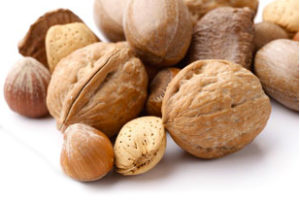 A newly published study reviewed 61 studies that looked at daily tree nut consumption on cardiovascular risk factors and found many health benefits. Tree nut (walnuts, almonds, pistachios, macadamia nuts, pecans, cashews, hazelnuts, and Brazil nuts) consumption lowers total cholesterol, LDL cholesterol, triglycerides, and ApoB, the primary protein in LDL cholesterol. It appeared that nut dose is more important than nut type in lowering cholesterol. The beneficial health effects are greater at about 60 grams (about 2 oz or 2 servings) or more nuts consumed per day, but positive health effects are also found at one serving per day. Five studies found that 100 g nuts per day lowered concentrations of LDL cholesterol by up to 35 mg/dL - an effect size comparable to some statin regimens.
 Data from 2 huge studies was analyzed and found that vigorous exercise and other healthy habits seems to cut the chance of developing aggressive and lethal prostate cancer up to 68 percent in men over 60. The beneficial lifestyle habits are: weekly vigorous exercise or activity to the point of sweating, at least 7 servings of tomatoes a week, at least one serving of fatty fish per week, reduced intake of processed meat, and being a long-term non-smoker.
 Several people have recently asked me whether scented candles have any health effects. The answer is a big YES - they have many negative health effects, and so do other scented products such as air fresheners and dryer sheets (e,g, Bounce). All of them contain fragrances and other chemicals - all from petrochemicals (which means they are chemical products derived from petroleum). And yes - all 3 products are totally unnecessary, so ditch them for better health. View all of them as
  Drink coffee daily - 3 to 5 cups of either regular or decaffeinated - and live longer by lowering your risk of premature death from cardiovascular disease, neurological disease, type 2 diabetes, and suicide. Yes, it was an observational study, but the results are similar to what other studies are finding. From Medical Xpress:
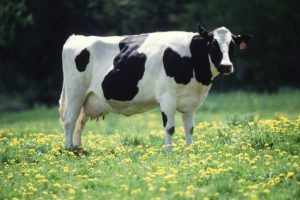 The American Academy of Pediatrics released a new report that the overuse of antibiotics in animals poses a real health risk to children. Giving routine antibiotics to animals leads to antibiotic resistant bacteria - which means that antibiotics may not work when given to people. Most of the antibiotics sold in the U.S. each year - 80 percent- are used in animals that people than eat. The great majority of antibiotics given to animals are the same ones given to humans.The main way to ensure that the meat that you are purchasing is antibiotic-free is to
  People spend a lot of effort trying to repel mosquitos - because the bites are so annoying and because they spread serious diseases. New research looking at different mosquito repellents - both DEET and non-Deet ("natural") products - had interesting results. What was once thought effective in repelling mosquitoes doesn't work at all (vitamin B patch), and what was thought attractive to mosquitoes may actually repel them (floral scents), and the "natural" alternatives may or may not work. Also - the
  The Y-shaped tube used in the study.
 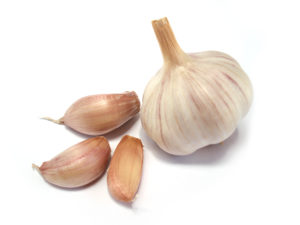 This study found that men who eat a lot of garlic (4 cloves in raw or capsule form) had a "more attractive" body odor to women. This is
 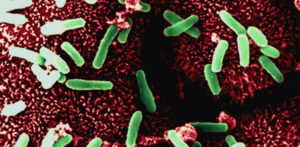 New research found that one course of
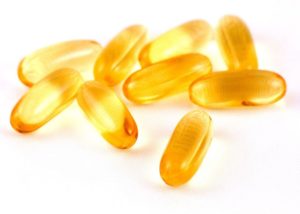 New research found that negative health effects - 35% increased risk of cardiovascular problems (coronary heart disease, heart attacks, strokes) are when the vitamin D levels are really low (under 15 nanograms per milliliter). Currently many doctors recommend optimal levels for health as somewhere between 35 to 40 ng/ml. One