An interesting in-depth book about the air we breathe and all the microbes in it was recently published. There are multitudes of microbes (viruses, bacteria, fungi) hidden in our air. We can't see them, but they are there. The book Air-borne: The Hidden History of the Life We Breathe is by award winning author Carl Zimmer.
Zimmer discusses a wide range of topics in this book, including how the virus COVID moves through the air (and its origins), the development of biological weapons (e.g., anthrax, smallpox) meant to spread through the air, the history of what humans know about microbes in the air, how air moves globally for thousands of miles, and the movement of a variety of contagious viruses through air. There is also a reference section at the end of the book.
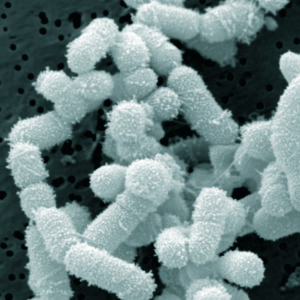
A group of international researchers got together and proposedreclassifying all the Lactobacillus species into 25 different groups (genera) a few years ago.
This was done because the Lactobacillus group had gotten too large and diverse, with over 250 bacterial species in it. The proposed name changes were then adopted by the leading microbiology society, which is why scientists currently use both new and old bacterial names, or just one or the other.
One bacteria important for sinus health is L. sakei. Lactobacillus sakei has now been reclassified as Latilactobacillus sakei, but both terms are used in research and elsewhere. The abbreviation L. sakei stays the same.
Most of the common Lactobacillus species that are used in probiotics have a name change, but typically either name (new and old) is acceptable. What many companies do to avoid confusion is to just use the abbreviated name (e.g., L. sakei, L. rhamnosus, and L. casei).
Examples of name changes for commonly used probiotic species: Lactobacillus sakei is now Latilactobacillus sakei, Lactobacillus rhamnosus is now Lacticaseibacillus rhamnosus, Lactobacillus plantarum is now Lactiplantibacillus plantarum, Lactobacillus brevis is now Levilactobacillus brevis, Lactobacillus salivarius is now Ligilactobacillus salivarius, Lactobacillus fermentum is now Limosilactobacillus fermentum, and Lactobacillus reuteri is now Limosilactobacillus reuteri.
However, the names of some commonly used probiotic species stayed the same, such as Lactobacillus crispatus, Lactobacillus gasseri, and Lactobacillus johnsonii.
The genus Lactobacillus was listed as the fifth most important category of living organism to have influenced the planet throughout its evolutionary history in a 2009 book, What on Earth Evolved?. From their central role in food fermentations around the globe to their ability to benefit health in their human and animal hosts, species of Lactobacillus have great importance in our lives....continue reading "Lactobacillus Name Changes"
The sinus microbiome consists of bacteria, viruses, and fungi all coexisting in the sinuses. Research has long focused on how the bacteria in sinus microbiomes in people with chronic sinusitis is different than in healthy persons without sinusitis (and yes, there are differences). Differences in the mycobiome (the fungi) of the sinuses appear to also play a role in chronic sinusitis.
A few recent studies found that there are differences in the fungi living in the sinuses in those without sinusitis and those with sinusitis (but results varied among the studies). Whether fungi play a role in the development of sinusitis has long been debated. Additionally, when samples are taken with a swab compared to sinus tissue samples during surgery - the results are different.
Sinuses Credit: Nat. Library of Medicine
In a recent study, researchers found differences in both the fungi (mycobiome), as well as bacteria, in persons with chronic sinusitis compared to healthy persons (the controls). There were differences in bacterial diversity (diminished diversity in those with chronic sinusitis), as well as the composition of the microbes. The researchers thought that fungal alterations can play a part in sinusitis.
By the way, when microbes in the sinuses are out of whack it is called dysbiosis. Researchers point out that the same microbes can be commensal or pathogenic (if numbers increase to high numbers) or have no effect on sinusitis.
AbstractObjectives - Dysbiosis of the sinonasal microbiome has been implicated in the pathogenesis of chronic rhinosinusitis (CRS). However, the mycobiome remains largely understudied, and microbial alterations associated with specific CRS subtypes have yet to be delineated. The objective of this study is to investigate the fungal and bacterial microbiome of sinus mucosa in CRS patients with and without nasal polyposis (CRSwNP and CRSsNP) versus healthy controls....continue reading "Fungi and Bacteria In The Sinus Microbiome"
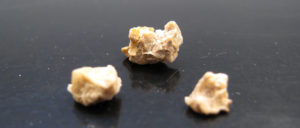
Finally, a study was done examining whether the kidneys have a microbiome (community of fungi, viruses, and bacteria). The answer is yes, the kidneys have a microbiome and the composition of the microbes plays a role in kidney health and whether a person develops kidney stones or not. This makes sense - all our other organs have microbiomes.
This multi-part study showed that the urinary tract is not sterile, and that low levels of bacteria are normal. Additionally, they found that the presence of the beneficial bacteria L. crispatus is found in the absence of kidney stones, while E.coli is associated with the development of kidney stones. (Interestingly, L. crispatus is also found in the healthy vagina and can treat bacterial vaginosis.)
The researchers found that the L. crispatus somehow blocked E.coli's ability to form kidney stones.
Antibiotic use was associated with bacteria that promoted the development of kidney stones because antibiotics kill off Lactobacillus species and promote the growth of kidney stone forming species (e.g., E. coli). Other studies also find that bacteria such as E.coli (as well as Proteus and Klebsiella) are frequently associated with UTIs, kidney stone formation, and kidney infection (pyelonephritis).
The bacteria Fusobacterium nucleatum is prevalent in periodontal disease (gum disease), but also in some chronic diseases and cancers, such as colorectal cancer. The bacteria F. nucleatum is normally found in the mouth (oral) microbiome, and its numbers increase as periodontal disease inflammation increases.
It is thought that sometimes the bacteria leaves the mouth and travels to other parts of the body, where it can promote cancer and other diseases.
A recent study found that the antibiotic FP 100 (Hygromycin A) totally eliminates the F. nucleatum bacteria in the mouth, and without causing harm to the mouth microbiome or gut microbiome. This is because it is a narrow spectrum antibiotic - only targets the harmful bacteria, and not all (both good and harmful) bacteria. While the study was only done in mice, this is promising and welcome news.
Eliminating the harmful bacteria in the mouth would potentially prevent some chronic diseases and cancers. Now we need further studies to see if this finding holds up in humans.
In a study published in the Journal of Oral Microbiology, ADA Forsyth scientists found that FP 100 (Hygromycin A), a first-in-class, small molecule, narrow-spectrum antibiotic, successfully eradicates Fusobacterium nucleatum without harming the oral or gut microbiomes....continue reading "A Promising Antibiotic For Gum Disease"
The CDC currently recommendsonly consuming pasteurized or ultra-pasteurized milk and dairy products. This is because heating milk kills off the bird flu virus (H5N1) now circulating among dairy cows in the USA. Another serious virus that pasteurization and ultra-pasteurization of milk kills off is the tick-borne encephalitis that occurs throughout central and eastern Europe.
Tick bites are the major way tick-borne encephalitis is spread. But a minority of cases are spread by consuming raw milk or dairy products from recently infected livestock (goats, sheep, and cows).
Tick-borne encephalitis is a serious viral infection of the central nervous system. It starts out with symptoms such as fever, headaches, chills, but up to 39% of cases result in more serious neurological symptoms (meningitis, encephalitis). Infected persons may experience long-term neurological effects lasting years.
Two ways to avoid the tick-borne encephalitis virus: only consuming pasteurized milk and dairy products (and avoiding raw milk and dairy products) or getting vaccinated with thetick-borne encephalitis vaccine (TicoVac, TBE vaccine).
Bottom line: Only consume pasteurized or ultra-pasteurized milk and dairy products.
Tick-borne encephalitis virus can be transmitted by ticks and the alimentary tract. A recent meta-analysis of 410 foodborne tick-borne encephalitis cases, mostly from a region in central and eastern Europe, aimed to describe cases of tick-borne encephalitis acquired through alimentary transmission in Europe from 1980 to 2021....continue reading "Raw Milk In Europe May Contain A Serious Virus"
The bird flu virus (H5N1 virus) has now been found in a number of American dairy herds and in raw milk from infected cows. Thus the medical advice is to avoid raw milk and raw milk products (such as raw milk cheeses). But medical experts and the CDC are now also warning about thoroughly cooking eggs and meat.
The virus is now in numerous dairy herds, in chicken flocks, and there have been outbreaks among more than 200 mammalian species. This is why medical advice is to avoid eating runny eggs and raw or medium raw beef.
The USDA conducted a study in which high amounts of the virus was injected into beef. No trace of the virus was left after the meat was cooked medium to well done (about 145 to 160 degrees F), but the virus was found in meat cooked to lower temperatures (120 degrees F). [By the way, the USDA recently tested 30 samples of grocery store ground beef and all 30 tested negative for the bird flu virus. But it was only 30 samples!!]
Cooking poultry and eggs to an internal temperature of 165˚F kills bacteria and viruses, including bird flu viruses. People should separate uncooked (raw) poultry from cooked foods and foods that won’t be cooked. Cook all poultry and poultry products (including eggs) all the way before eating. More information about safe handling and cooking of poultry can be found here: Chicken and Food Poisoning
For beef:
Cooking beef to the appropriate internal temperature kills bacteria and viruses, including avian influenza viruses. Cook all beef products thoroughly before eating. Refer to this list of safe minimum internal temperatures for different cuts of beef. Separate uncooked (raw) beef from cooked foods or foods that won’t be cooked to prevent cross-contamination.
Time to avoid raw milk and raw milk cheeses. The bird flu virus (H5N1) has been spreading among dairy cows for months, and now scientists are finding extremely high amounts of the bird flu virus in cows' milk. The good news is that pasteurization will kill the virus.
The big concern is that somehow the virus will mutate and start infecting humans on a large scale. Besides cattle, there have been outbreaks of the virus in over 200 species of mammals since 2022. Millions of wild birds have died from the virus.
The National Institute of Health (NIH) reports that: 1) The H5N1 bird flu virus survived in raw dairy milk kept under refrigerated conditions for at least 5 weeks (they didn't test beyond that point). 2) When mice consumed infected raw milk, they showed signs of illness. This suggests that drinking raw milk may pose a risk of transmission to people. 3) Pasteurization "neutralized" the virus
The following article reports that as of June 5, H5N1 infections have been confirmed in more than 80 dairy herds in 9 states and in 3 dairy farm workers, who had mild symptoms (first 2 had conjunctivitis type eye symptoms, the 3rd had respiratory symptoms). A number of cats have died from the virus after ingesting raw milk.
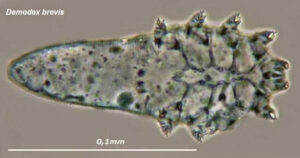
A recent study confirmed that in the skin condition called rosacea, the skin microbiome is out of whack (dysbiosis). Of course. The study also confirmed that treatment with a topical ivermectin cream helps with the inflamed red skin rashes on the face and lowers the number of Demodex mites found on the skin.
Demodex mite Credit: Wikipedia
But while the cream improved symptoms in 44% of the patients, it didn't correct the skin dysbiosis. In rosacea, there is a big increase of Demodex mites (compared to normal levels) at the site of the red rashes or lesions. After the topical ivermectin cream treatment, the number of mites decreased in 88% of the rosacea group to more normal levels. [Yes, we all have Demodex mites living on our skin.]
However, other bacterial species are still different in the rosacea group compared to healthy persons without rosacea. The researchers found Cutibacterium species are predominant in healthy persons without rosacea, but are not found in persons when they have rosacea inflammation. Instead Staphylococcus species take over (just like in atopic dermatitis).
The skin microbiome is the community of bacteria, viruses, fungi that live on our skin. Rosacea is an inflammatory skin condition that typically affects the face resulting in redness, pimples, swelling, and dilated blood vessels. It frequently begins with flushing (redness) of the face in symmetrical patches, and it may or may not progress.
Topical ivermectin has significant clinical efficacy and decreases the density of Demodex mites found in the skin of people with rosacea, but cutaneous dysbiosis remains, according to a report presented at the recent European Academy of Dermatology and Venereology (EADV) 2023 Congress....continue reading "The Skin Microbiome Is Different In Persons With Rosacea"
Soon there may be an oral vaccine for recurrent urinary tract infections (UTIs). That is wonderful news for millions of women suffering from frequent urinary tract infections, who wind up taking repeated courses of antibiotics. Yet they keep getting UTIs.
In a small study, 54% of the persons who took the vaccine remained UTI free for the entire 9 year follow-up period, with the average UTI free period in the group (72 women and 17 men) of 4 1/2 years. The researchers said the results were a "game-changer" for the study participants.
In this study, the vaccine was given "off label" in the UK. 40% of the group had repeated doses after 1 or 2 years. Please view the study as having preliminary results, especially because the study did not have a control group that didn't receive the vaccine. There were no notable adverse effects from the vaccine .
The vaccine, called Uromune (MV140), was developed by Immunotek in Spain. The vaccine is composed of inactivated whole bacteria commonly associated with UTIs: E.coli, K. pneumoniae, P. vulgaris, and E. faecalis. It is taken every day - 2 sprays of a pineapple flavored liquid under the tongue for three months.
The vaccine is not approved by the FDA in the US at this time. It is currently pending approval in Canada and available off-license in 26 countries, including Mexico. Clinical trials are now going on. It has been in use for several years (more than 40,000 patients).
What to do now? While you're waiting for US FDA vaccine approval, why not try D-mannose for UTIs? It's non-prescription, safe, available as capsule or powder, works well for most species implicated in UTIs (such as E. coli), and readily available. Studies support its use as either a preventive or a treatment for UTIs, and as a replacement for antibiotics.

 An interesting in-depth book about the air we breathe and all the microbes in it was recently published. There are multitudes of microbes (viruses, bacteria, fungi) hidden in our air. We can't see them, but they are there. The book Air-borne: The Hidden History of the Life We Breathe is by award winning author Carl Zimmer.
 A group of international researchers got together and
  The sinus microbiome consists of bacteria, viruses, and fungi all coexisting in the sinuses. Research has long focused on how the bacteria in sinus microbiomes in people with chronic sinusitis is different than in healthy persons without sinusitis (and yes, there are differences). Differences in the mycobiome (the fungi) of the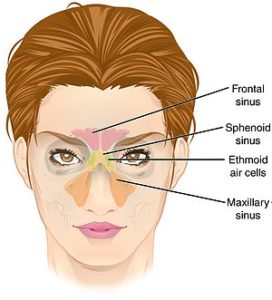
 The bacteria Fusobacterium nucleatum is prevalent in periodontal disease (gum disease), but also in some chronic diseases and cancers, such as colorectal cancer. The bacteria F. nucleatum is normally found in the mouth (oral) microbiome, and its numbers increase as periodontal disease inflammation increases.
 The CDC currently
  Tick-borne encephalitis is a serious viral infection of the central nervous system. It starts out with symptoms such as fever, headaches, chills, but
  The bird flu virus (H5N1 virus) has now been found in a number of American dairy herds and in raw milk from infected cows. Thus the medical advice is to