Skip to content

The results of a recent study by Vanderbilt University may help explain why some people have difficulty raising their low vitamin D levels - it may be that their magnesium levels are low. It appears that magnesium may regulate vitamin D levels - when vitamin D levels are low, magnesium supplementation raises vitamin D levels, and when vitamin D levels are high, magnesium supplementation lowers them to a normal level.

What are good food sources of magnesium? Magnesium is found in many plant and animal foods and beverages. Good sources of magnesium include green leafy greens, legumes (beans), whole grains, nuts, dark chocolate, and fatty fish such as salmon. Foods containing dietary fiber generally provide magnesium. By the way, dietary surveys of people in the United States consistently show that intakes of magnesium are lower than recommended amounts. From Medical Xpress:

Study shows magnesium optimizes vitamin D status

A randomized trial by Vanderbilt-Ingram Cancer Center researchers indicates that magnesium optimizes vitamin D status, raising it in people with deficient levels and lowering it in people with high levels. 

...continue reading "Magnesium Regulates Vitamin D Levels In the Body?"

Once again a study finds health benefits from consuming a Mediterranean style diet - a diet rich in fruits , vegetables, whole grains, nuts, seeds, legumes (beans), olive oil, and fish. The US Women's Health Study involved almost 26,000 women who were healthy at the start of the study and were followed for up to 12 years. The researchers found that a higher consumption of a Mediterranean style diet was associated with about a 28% lower risk in cardiovascular disease events (heart attack, stroke, coronary arterial revascularization, cardiovascular death). Based on what they generally ate, they were classified as having a low, middle, or upper intake of a Mediterranean style diet.

From Medical Xpress: Researchers explore what's behind Mediterranean diet and lower cardiovascular risk

A new study by investigators from Brigham and Women's Hospital, Harvard Medical School, and the Harvard T.H. Chan School of Public Health offers insights from a cohort study of women in the U.S. who reported consuming a Mediterranean-type diet. Researchers found about a 25 percent reduction in the risk of cardiovascular disease among study participants who consumed a diet rich in plants and olive oil and low in meats and sweets. The team also explored why and how a Mediterranean diet might mitigate risk of heart disease and stroke by examining a panel of 40 biomarkers, representing new and established biological contributors to heart disease.   

...continue reading "Mediterranean Diet and Heart Disease"

Pregnant women have been advised to keep their consumption of coffee and other caffeinated beverages (tea, sodas, cocoa, energy drinks), and chocolate containing foods to a minimum for decades. Currently the American College of Obstetrics recommends that women consume less than 200 mg of caffeine (from any source) per day during pregnancy. This is less than 2 cups of regular coffee  or 4 cups of regular black tea. But a recent  study's findings suggest that the levels should be kept much lower.

The study of 941 mother/baby pairs in Ireland found that each 100 mg increase of caffeine per day was associated with a lower birth weight, shorter length of pregnancy (gestational age), shorter birth length of the baby, and smaller head circumference of the baby at birth. The strongest associations between those who consumed the most caffeine (when compared to those who consumed the least) was with lower birth weight.

The researchers think this occurs because caffeine crosses the placenta easily, but during pregnancy there is a slowed metabolism of caffeine (so it takes longer to get it out of the body). Similar results have been found in other recent studies. [On the other hand, for not pregnant women - coffee and tea are linked to all sorts of health benefits - here, here.]

From Medical Xpress: Caffeinated beverages during pregnancy linked to lower birth weight babies

...continue reading "Keep Caffeine To A Minimum During Pregnancy"

Another reason to eat fruits and vegetables daily - cognitive and memory functioning in later life. A large US study of 27,842 men found that a higher intake of fruits, vegetables, and orange juice for many years is linked to a lower risk of poor cognitive functioning in later years of life (70s and beyond). The study specifically looked at subjective cognitive function - a measure of earliest changes in cognitive functioning, including memory. This is the stage before "mild cognitive impairment". The study started in 1986 when the average age was 51 years, and continued till 2012. The men studied were all health professionals (e.g. dentists)

What was a high intake of fruits and vegetables? For vegetables: about 5.7 servings per day (while the lowest intake was 1.7 servings per day). For fruit: high intake was 3.1 servings per day (vs lowest intake was .5 servings per day). For fruit juice (orange juice): high intake was 1.5 servings per day (vs lowest intake was .1 servings per day). A serving of fruit is considered one cup of fruit or ½ cup of fruit juice. A serving of vegetables is considered one cup of raw vegetables or two cups of leafy greens.

The researchers found that green leafy vegetables, carotenoid-rich vegetables (esp. tomatoes and peppers), cantalope, berries, and orange juice to be especially protective. They point out that many antioxidant nutrients and bioactive substances (including vitamins A,B, C, and E, carotenoids, flavonoids, and polyphenols) are all found naturally in vegetables, fruits, and juices. These are thought to reduce brain oxidative stress, improve cognitive performance, and to prevent neuronal damage. In other words, all good things for the brain. From Science Daily:

Orange juice, leafy greens and berries may be tied to decreased memory loss in men

Eating leafy greens, dark orange and red vegetables and berry fruits, and drinking orange juice may be associated with a lower risk of memory loss over time in men, according to a study published in the November 21, 2018, online issue of Neurology, the medical journal of the American Academy of Neurology.  ...continue reading "Eat Fruits And Vegetables Every Day!"

In the US and other developed countries it is generally accepted that blood pressure increases with age -  that a blood pressure rise starts in childhood and that it's a normal part of aging. However, a new study found that this is not true - a South American rainforest tribe (the Yanomami) who do not eat a western diet (at all!) and have an active lifestyle, have the exact same blood pressure throughout life. This was true for all the individuals studied - from age 1 to 60. A nearby village of the Yekwana tribe have some western influences on lifestyle and diet, had the same low blood pressure in childhood, but showed increases with age.

The researchers feel that a Western diet and lifestyle play a role in the blood pressure increasing over the life span. They are now looking at the gut microbes of the two tribes to see what role they have in these blood pressure differences. Bottom line: get off your butt  and get active, and eat a high fiber, whole food diet (to feed the beneficial microbes) -  and avoid highly processed foods if you can. Easier said than done. From Science Daily:

Study of two tribes sheds light on role of Western-influenced diet in blood pressure

...continue reading "Blood Pressure Doesn’t Always Increase With Age"

Whoa.... a recent study examined food microbiomes (community of microbes) of some foods and found that the foods contained many species of microbes - hundreds of species! The foods examined were a variety of masala spice mixes, cilantro, smoked salmon, cucumbers, and mung bean sprouts.

Other studies have also found large numbers of bacterial species in all sorts of foods, including raw fruits and vegetables, cheeses, and fermented foods, such as kimchi. There are also bacterial differences between conventional and organic foods. No wonder it's good to eat a diverse diet - all those microbes that you're ingesting! A diverse gut microbial community in humans is considered healthy by researchers.

The researchers (all associated with the US FDA - Food and Drug Administration) looked at the bacterial "species richness" (number of different bacterial species) normally found on the 5 types of foods. They used modern genetic sequencing methods to analyze the food microbiomes and found a LOT of bacterial species ("high bacterial diversity"), as well as species unique to the different foods sampled - whether animal or plant based foods.

They found not only beneficial species, but also species associated with food spoilage. Every food had some bacteria that could eventually lead to food spoilage (which makes sense - eventually all foods can spoil). Also, how the food was handled and packaged, as well as moisture levels, influenced the bacterial species found in the foods.

The masala spice mixes were especially rich in bacterial species (from from 968 to 1097) and in unique species (19), but the mixes also contained as many as 17 ingredients. Cucumbers had between 227 and 423 bacterial species, and 216 to 573 species for cilantro. Smoked salmon samples had fewer species - ranging from 89 to 181 species. An example of the diversity is that the cucumber microbiome is comprised of species within Proteobacteria (45 to 85%), Firmicutes (2 to 40%), Actinobacteria (8 to 31%), and Bacteroidetes (0 to 2%).

I don't know if one can ever replenish all the bacteria lost from years of antibiotics (e.g. for sinus infections - both chronic and acute sinusitis), but this is a good reason to eat a variety of foods - for all the species of bacteria. These bacterial species are not found in general probiotic pills - one must eat the foods to ingest the variety and richness of microbes.

The researchers wrote: "Once established, the most likely source of new microbes joining our GI microbiome is the food we eat: each food stuff and commodity we consume likely contains a microbiome that passes through our bodies while nutritional ingredients and components are digested."

It is unknown how many of these microbes stick around in our body, but lots of research finds that a diet rich in fruits, vegetables, whole grains, seeds, nuts, legumes, some fish and meat (including poultry), some dairy - are beneficial to our gut microbiome, along with numerous health benefits. The fiber in these foods is also beneficial in that it feeds beneficial microbes. [see category NUTRITION for research, also Feeding Your Gut Microbes page.]

Excerpts from research by Karen G. jarvis et al in Frontiers In Microbiology:

Microbiomes Associated With Foods From Plant and Animal Sources

...continue reading "Common Foods Contain Hundreds Of Diverse Bacterial Species"

A recently published study was good news for those who eat organic foods. The large French study (about 69,000 people) found a  significantly lower risk of getting cancer (25% lower) in people who ate a lot of organic food - when compared to people who rarely or never ate organic food.

The participants in the study were followed for an average of 4.6 years. Cancers with the greatest decreased risk were breast cancer (especially in postmenopausal women) and all lymphomas, especially non-Hodgkin lymphoma.

The researchers summarized the findings as:  "In a population-based cohort study of 68 ,946 French adults, a significant reduction in the risk of cancer was observed among high consumers of organic food." and "...if the findings are confirmed, promoting organic food consumption in the general population could be a promising preventive strategy against cancer." This could be an easy way to cut cancer risk! (Other organic food benefits.)

Of course the pesticide and conventional agriculture industry went nuts attacking the study - this finding goes against their message that pesticides are fine and necessary, don't worry about pesticide residues in food, and that antibiotics and other medicines are safe when given routinely to animals.

Unfortunately, research finds that a number of pesticides used in conventional farming are considered carcinogenic (cancer causing), and pesticide residues are found in conventionally grown foods. Eating conventional foods every day results in chronic low-dose pesticide residue exposure. The researchers suspect the pesticide residues in foods is the reason for the higher cancer risk. [Note: those pesticides are not allowed to be used in organic farming.]

What foods did the researchers ask about? They asked people about the consumption of 16 types of labeled organic food products: fruits; vegetables; soy-based products; dairy products; meat and fish; eggs; grains and legumes; bread and cereals; flour; vegetable oils and condiments; ready-to-eat meals; coffee, tea, and herbal tea; wine; biscuits, chocolate, sugar, and marmalade; other foods; and dietary supplements. In other words, all the foods we eat daily.

But what I found really interesting was a review of the study by Dr. Charles Benbrook (Visiting Scholar in the Bloomberg School of Public Health, Johns Hopkins University, and a Visiting Professor at the Univ. of Newcastle in the UK). He correctly points out that the results are big news and a big deal.

Excerpts from Environmental Health News: Charles Benbrook: New study showing organic diets cut cancer risk is a big deal. Let’s treat it that way.      ...continue reading "Lower Cancer Risk By Eating Organic Food?"

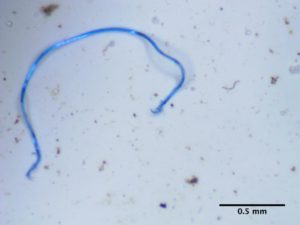
It turns out that we're all eating tiny bits of plastic in our food. Yes, teeny tiny bits of plastic that are smaller than 5 mm and are called microplastics. Why are there tiny plastic pieces in our food? Is it doing anything to us, to our health? What can we do about it? After all, it's not normal or desirable to eat plastic.

Most of us have heard of the "garbage patches" in the oceans - consisting of many pieces of plastic debris, both big and small. But the reality is that tiny pieces of plastic are all around us, not just far away in the ocean. Microplastics can be found in our drinking water, bottled water, in the seafood we eat, in honey and sugar, in beer, table salt, even in our house dust (which includes tiny synthetic fibers, such as polyester, that are constantly being shed from soft furnishings, clothing, and carpet fibers), and outside air (e.g. from tires). This is microplastic pollution, and unfortunately this pollution is increasing each year because we are increasing our use of plastics. [Other posts on this topic here, here, here.]

Every time we eat a meal we ingest any plastics that are in the food, as well as any plastic particles floating in the air that settle on our food and which we then ingest. One recent study found that about 80 to 100 pieces of tiny plastic particles are eaten over the course of each meal in this way!

Currently no one knows what ingesting all these microplastics is doing to us, if anything. The research hasn't been done. However, there are questions and concerns, especially because toxic chemicals (carcinogens, endocrine disruptors, etc) used in plastic manufacturing are in the microplastics, as well as any contaminants that the plastics were exposed to in the environment. There may  even be microbes (including pathogens) on the plastics. A recent study found that we excrete microplastics  in our feces.

A 2017 United Nations report about microplastics and food safety said that while much remains unknown, microplastics in our food doesn't appear to be health threat: "It is thought that only the smallest particles (1.5 µm or less) will penetrate into the capillaries of the organs and the remaining will be excreted." and "Based on the available scientific evidence, it is safe to state that microplastics neither seem to pose a significant food safety threat and the health benefits associated with the intake of fishery products will exceed the potential risks.Nonetheless, there are many knowledge gaps..."

From National Geographic: Microplastics found in 90 percent of table salt ...continue reading "We Are All Eating Microplastics"

Is the Mediterranean style diet the future in breast cancer prevention? The following study was done in primates, but it makes sense that the results would also be true for humans: that the type of diet eaten influences the breast microbiome. This means the community of microbes that live in the breast. Yes, it's true - studies show that there is a breast microbiome and it varies between those who have breast cancer and those who don't (healthy breasts).

The study looked at macaque monkeys who were fed either a Mediterranean style diet or a Western style diet for 31 months, and then their breast tissue was examined. They found microbial differences in the breast tissue among the 2 groups, including  greater numbers (abundance) of Lactobacillus species in the primates that had been eating the Mediterranean diet.

Lactobacillus species are generally considered beneficial to humans (which is why they are added to many foods and supplements) and studies suggest they may have anti-tumor effects. Some research has found microbial differences between healthy and malignant (cancerous) human  breast tissue  - including lower Lactobacillus numbers or "abundance" in the malignant breast tissue (compared to those with benign breast lesions). Researchers say it suggests that microbial imbalances (dysbiosis) of breast tissue could be a possible driver of breast cancer .

Studies already show that a person's diet influences the gut microbiome. This study shows diet directly influences microbial communities far away from the gut - in the breasts. Unfortunately it is not stated in the study what Lactobacillus species increased in the breast tissue of primates fed a Mediterranean diet. There are many Lactobacillus species, and they are not equal in their effects (as our experiences with Lactobacillus sakei and sinusitis has shown).

Of course more studies are needed, but in the meantime - eat a diet rich in fruits, vegetables, whole grains, legumes (beans), nuts, and seeds. There are many other documented health benefits from a diet rich in those foods (frequently referred to as a Mediterranean diet). The diet is low in processed foods and high in fiber, and rich in "real foods". From Science Daily:

Diet affects the breast microbiome in mammals

Diet influences the composition of microbial populations in the mammary glands of nonhuman primates, researchers report October 2 in the journal Cell Reports. Specifically, a Mediterranean diet increased the abundance of probiotic bacteria previously shown to inhibit tumor growth in animals.  ...continue reading "Diet And The Breast Microbiome"

Many people have chronic low-grade inflammation, which is associated with a number of chronic diseases, and increased risk of heart disease, cancer, type 2 diabetes, and early death. Thus there is a lot of interest in things a person could do to lower the inflammation.

A number of studies have found a person's general diet may influence chronic low-grade inflammation - either increase it or decrease it, as well as whether they smoke or not. A recent large Swedish study found that persons who ate an anti-inflammatory diet for at least 16 years had a lower risk of dying early from any cause (all cause mortality), as well as dying from cancer, or dying from heart (cardiovascular) disease.

In the study an anti-inflammatory diet was a diet rich in fruits, vegetables, whole grain cereals, whole grain bread, coffee, tea, red wine (low to moderate levels), beer (low to moderate levels), chocolate, nuts, olive and canola oils. These foods are both anti-inflammatory and also rich in anti-oxidants. Pro-inflammatory foods were: red meat, processed red meat, offal, chips, soft drinks. In other studies a pro-inflammatory diet was also one with lots of processed foods, low fiber, and refined grains.

From Science Daily: Anti-inflammatory diet linked to reduced risk of early death

Adhering to an anti-inflammatory diet was associated with lower risks of dying from any cause, dying from cardiovascular causes, and dying from cancer in a recent Journal of Internal Medicine study. ...continue reading "Diet, Inflammation, and Health"