 There are many posts on this site about the microbes within us (the microbiome) or around us, but the following article may be a real eye opener. Due to the permafrost melting (as in Alaska, northern Canada, Siberia, etc) from global warming, old infectious viruses and bacteria might be released from the thawing permafrost. This is what recently happened in Siberia, where melting permafrost released anthrax spores which killed 2300 reindeer and a 12 year old boy, and sickened at least 20 other people. From Scientific American:
As Earth Warms, the Diseases That May Lie Within Permafrost Become a Bigger Worry
This past summer anthrax killed a 12-year-old boy in a remote part of Siberia. At least 20 other people, also from the Yamal Peninsula, were diagnosed with the potentially deadly disease after approximately 100 suspected cases were hospitalized. Additionally, more than 2,300 reindeer in the area died from the infection. The likely cause? Thawing permafrost. According to Russian officials, thawed permafrost—a permanently frozen layer of soil—released previously immobile spores of Bacillus anthracis into nearby water and soil and then into the food supply. The outbreak was the region's first in 75 years.
Researchers have predicted for years that one of the effects of global warming could be that whatever is frozen in permafrost—such as ancient bacteria—might be released as temperatures climb. This could include infectious agents humans might not be prepared for, or have immunity to, the scientists said. Now they are witnessing the theoretical turning into reality: infectious microorganisms emerging from a deep freeze....In a 2011 paper published in Global Health Action, co-authors Boris A. Revich and Marina A. Podolnaya wrote of their predictions: “As a consequence of permafrost melting, the vectors of deadly infections of the 18th and 19th centuries may come back, especially near the cemeteries where the victims of these infections were buried.”
And permafrost is indeed thawing—at higher latitudes and to greater depths than ever before....What thawing permafrost could unleash depends on the heartiness of the infectious agent involved. A lot of microorganisms cannot survive in extreme cold, but some can withstand it for many years. “B. anthracis are special because they are sporulating bacteria,” says Jean-Michel Claverie, head of the Mediterranean Institute of Microbiology and a professor at Aix-Marseille University in France. “Spores are extremely resistant and, like seeds, can survive for longer than a century.”
Viruses could also survive for lengthy periods. In 2014 and 2015 Claverie and his colleague Chantal Abergel published their findings on two still infectious viruses from a chunk of 30,000-year-old Siberian permafrost. Although Pithovirus sibericum and Mollivirus sibericum can infect only amoebas, the discovery is an indication that viruses that infect humans—such as smallpox and the Spanish flu—could potentially be preserved in permafrost.
Human viruses from even further back could also make a showing. For instance, the microorganisms living on and within the early humans who populated the Arctic could still be frozen in the soil. “There are hints that Neandertals and Denisovans could have settled in northern Siberia [and] were plagued by various viral diseases, some of which we know, like smallpox, and some others that might have disappeared,” Claverie says....Janet Jansson, who studies permafrost at the Pacific Northwest National Laboratory in Washington State, is not worried about ancient viruses. Several attempts to discover these infectious agents in corpses have come up empty, she notes.
In effect, infectious agents buried in the permafrost are unknowable and unpredictable in their timing and ferocity. Thus, researchers say thawing permafrost is not our biggest worry when it comes to infectious diseases and global warming. The more immediate, and certain, threat to humans is the widening geographical ranges of modern infectious diseases (and their carriers, such as mosquitoes) as the earth warms. “We now have dengue in southern parts of Texas,” says George C. Stewart, McKee Professor of Microbial Pathogenesis and chair of the department of veterinary pathobiology at the University of Missouri. “Malaria is seen at higher elevations and latitudes as temperatures climb. And the cholera agent, Vibrio cholerae, replicates better at higher temperatures.”
 Bacillus anthracis - Anthrax bacteria Credit:Wikipedia
 Skin anthrax lesion on the neck Credit:Wikipedia


 Another study finding a link with low levels of vitamin D and a health problem - this time an increased risk of bladder cancer. Vitamin D is frequently called the "sunshine vitamin" because sunlight is the best source of vitamin D (our body makes vitamin D3 from sunlight exposure on our bare skin). If you take vitamin D supplements, look for vitamin D3 (rather than D2). From Medical Xpress:
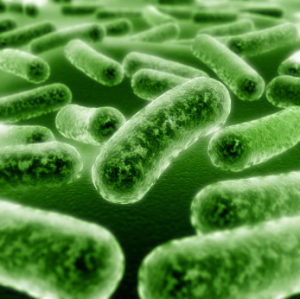 Could certain beneficial bacteria (probiotics) help prevent or deal with infections in burn wounds?
 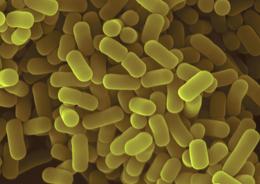 Lactobacillus plantarum Credit: Nature
 Eating lots of fruits and vegetables (more than 10 servings a day!) is linked to better cognitive functioning in both normal weight and overweight adults (both young and older adults), and may delay the onset of cognitive decline that occurs with aging and also dementia.
 Another study finding brain changes from playing tackle football - this time measurable brain changes were found in boys 8 to 13 years old after just one season of playing football. None of the boys had received a concussion diagnosis during the season. The changes in the white matter of the brain (and detected with magnetic resonance imaging (MRI) were from the cumulative subconcussive head impacts that occur in football - the result of repetitive hits to the head during games and practices.
 I've been thinking a lot about
 Lead exposure is a big problem for children throughout the United States and the rest of the world - whether lead from plumbing, lead paint, lead solder, and even from nearby mining. There are no safe levels of lead in children (best is zero) because it is a neurotoxicant - thus it can permanently lower IQ scores as well as other neurological effects. More lead gets absorbed if the person also has an iron deficiency than if the person has normal iron levels.
 Many articles have been written about